


Bursitis
Learn about shoulder, elbow, knees, and hip bursitis pain.
Select a Topic
- What is Bursitis?
- What are the Symptoms of Bursitis?
- Bursitis Pictures
- What Causes Bursitis?
- Diagnosing Bursitis
What is Bursitis?
Bursitis refers to the irritation or inflammation of a bursa, which is a small fluid-filled sac that acts as a gliding surface to minimize friction between the tissues of the body, most commonly at joints. There are more than 150 bursae in the body that cushion and lubricate areas where the bones, muscles and tendons move across one another.
Some of these bursae are located next to the tendons near the larger joints and these usually occur in the shoulders, elbows, hips, knees and ankles. Bursitis usually causes pain and stiffness in the tissues surrounding the joints, instead of pain in the joints themselves.
What are the Symptoms of Bursitis?
Symptoms and Signs of Bursitis
- Pain the area of the bursa
- A dull ache or stiffness in the area around your elbow, hip, knee, shoulder, big toe or other joints
- Worsening pain with movement or pressure
- Tenderness
- Swelling
- An area that feels swollen or warm to the touch
- Loss of motion in the affected area – e.g., loss of motion in the shoulder is called "adhesive capsulitis" or frozen shoulder
- Occasional skin redness in the area of the inflamed bursa
Bursitis Pictures
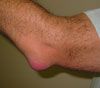 |
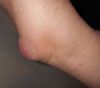 |
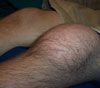 |
What Causes Bursitis?
People who overexert themselves in activities or have arthritis are at risk of developing bursitis because of altered body alignment and movement. If the muscles in a particular area of the body are weak or tight, injury to bursa is more likely to occur.
For this reason, if you have not participated in physical activity for a while and suddenly decide to run a few kilometers, you may be setting yourself up for injury. This happens because you have not conditioned your body for this type activity and generally, you would need to ease into it gradually by strengthening and stretching your muscles.
Diagnosing Bursitis
The diagnosis of bursitis will involve an examination of the affected area. Your doctor will feel the affected area for swelling, tenderness and pain. Additional tests such as X-rays, blood tests or an analysis of fluid withdrawn from an inflamed bursa may be used to detect other causes of joint inflammation and pain.
Bursitis usually occurs as a result of stress and overuse. Infection, arthritis or gout may also cause bursitis as can direct trauma to joints such as prolonged pressure from kneeling or resting your elbow on a desk. Bursitis commonly affects the shoulder, elbow, buttocks, hip, knee and ankle and is usually caused by repetitive movements associated with certain activities. While the following are the most common areas bursitis affects, the base of the thumb, Achilles tendon, heel, foot, leg, and even the toe can be affected.
- Shoulder Bursitis of the shoulder usually stems from a rotator cuff injury. This type of injury may be caused by a number of things including falling, lifting heavy items, poor posture or repetitive overhead arm activities. Pain can radiate down into the armpit.
- Elbow Bursitis of the elbow is related to actions that require you to repeatedly bend and extend your elbow. You may develop this type of bursitis from leaning on your elbows, swinging a golf club or a tennis racket (tennis elbow).
- Buttocks Bursitis of the buttocks refers to an inflamed bursa over the bone in the buttocks – this may caused by sitting on a hard surface for a long period of time.
- Hip Bursitis may be as a result of arthritis or a hip injury. Standing or sitting for long periods also puts pressure on the hip which may lead to hip Bursitis. The most common cause of hip pain is hip Bursitis.
- Knee Bursitis of the knee is caused from activities that require repetitive kneeling such as gardening or scrubbing the floor(housemaid’s knee). People who are overweight and suffer from arthritis may also develop bursitis around the knee.
- Ankle Bursitis of the ankle is caused by uncomfortable footwear, prolonged walking or sports such as ice-skating.
Treatments for Bursitis
Symptomatic bursitis treatment usually includes rest and immobilizing (splint or cast) the affected area, applying heat for chronic inflammation or ice for acute inflammation. Nonsteroidal anti-inflammatory (NSAIDs), pain medications or a cortisone medication are common bursitis treatments as well.
Sometimes, an aspiration procedure is required to treat a swollen bursa – when the bursa fluid is removed from the affected area with a needle and syringe under sterile conditions. Supportive treatments such as massage, hydrotherapy, physical therapy and reflexology are also useful. Bursitis usually heals within a week a week or two and simply requires home treatment.
Tips for How to Deal with Bursitis
Preventing Bursitis
These useful tips can help prevent and reduce the recurrence of bursitis.
- Exercise regularly by doing range-of-motion exercises to maintain strength and flexibility, especially your core abdominal muscles.
- Stretch your muscles or warm up before physical activity.
- Practice good posture by not slouching, walking with a stooped back or leaning on your elbows.
- Take regular breaks from daily activities that place repetitive strain on your muscles or joints.
- Avoid sitting still for long periods and make an effort to move around more.
- Alternate the activities by resting or participating in activity that does not cause discomfort.
- Protect your wrists and hands by using utensils or pens with large or foam-covered handles so that do not clench or grip too tightly.
- Use cushioned chairs and kneeling and elbow pads to protect joints and provide added support.
- Wear supportive shoes. Avoid wearing shoes that do not fit properly and wear heel cups or shoe inserts if required.
- Avoid smoking as smoking weakens collagen production needed for wound and tissue healing.